
 By Aliza Beth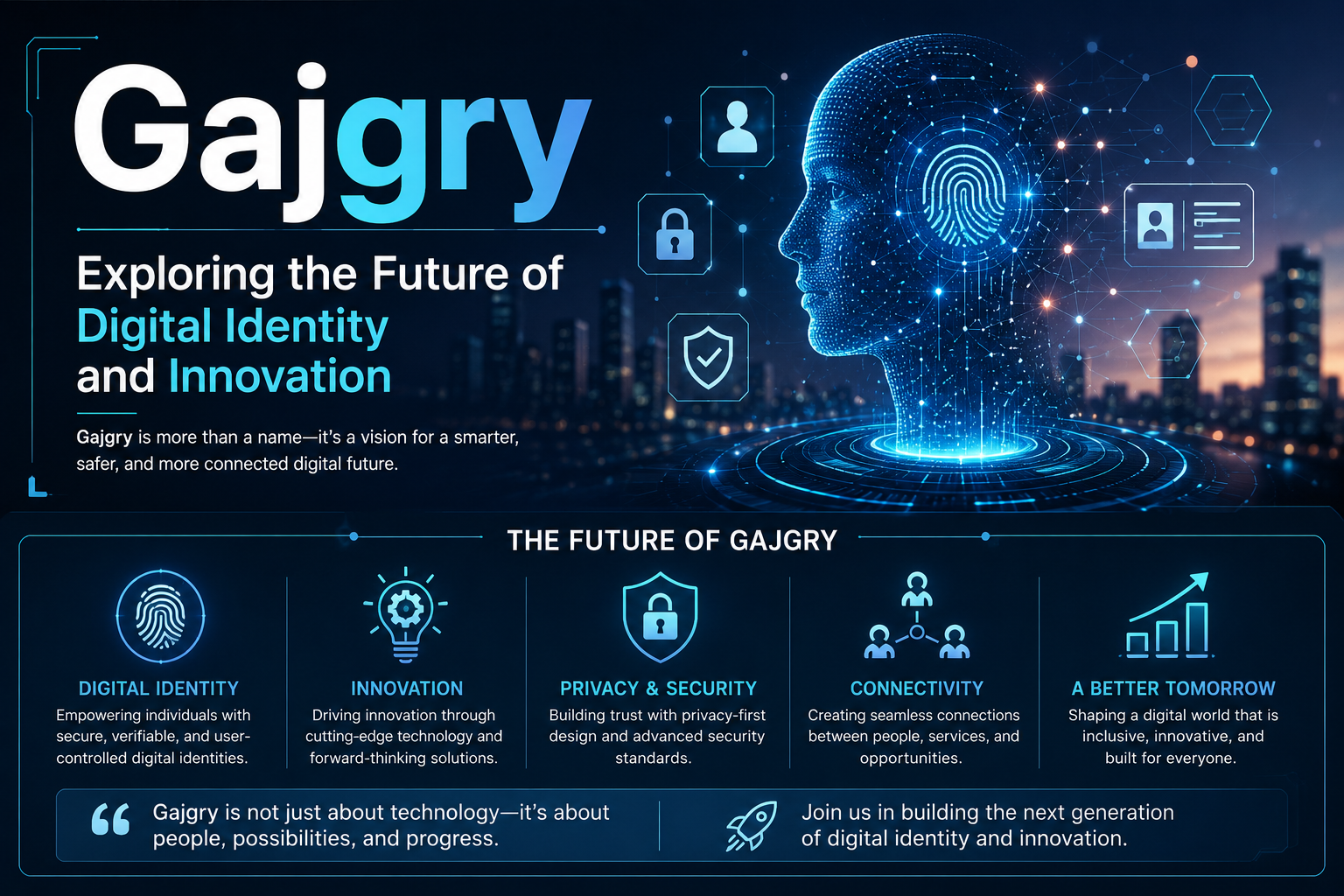
The most influential ideas often begin as unfamiliar words. A decade ago, terms like blockchain, fintech, and creator economy were largely unknown outside specialized circles. Today, they shape industries, influence investment decisions, and redefine how people interact with technology. The emergence of gajgry reflects a similar pattern. While the term may still be gaining recognition, it represents a broader conversation about digital innovation, connectivity, and the evolving relationship between technology and human experience.
As businesses navigate an increasingly digital world, concepts like gajgry are attracting attention from entrepreneurs, technology enthusiasts, and innovators seeking to understand emerging trends. Whether viewed as a framework, a digital philosophy, or a symbol of next-generation transformation, gajgry highlights the growing importance of adaptability in a rapidly changing landscape.
Understanding the significance of gajgry requires looking beyond the word itself. It involves examining how digital ecosystems evolve, how organizations respond to technological disruption, and how innovation continues to reshape modern society.
Understanding the Concept of Gajgry
At its core, gajgry can be interpreted as a representation of interconnected digital progress. It embodies the idea that technology is no longer confined to individual tools or isolated platforms. Instead, modern innovation thrives through networks, collaboration, and seamless integration.
In today’s business environment, companies rarely succeed through technology alone. Success increasingly depends on how effectively organizations connect systems, data, people, and ideas. Gajgry symbolizes this interconnected approach, where value emerges from relationships rather than individual components.
This perspective aligns with the reality of modern digital transformation. Cloud computing, artificial intelligence, automation, and data analytics are most powerful when they work together. The concept of gajgry captures this convergence, emphasizing unity within technological complexity.
The Evolution of Digital Innovation
Innovation has undergone dramatic changes over the past several decades. Early technological development focused primarily on hardware and infrastructure. Businesses invested heavily in physical systems designed to improve efficiency and productivity.
The internet transformed that model by creating unprecedented opportunities for communication and information sharing. Mobile technology expanded connectivity further, enabling people to access digital resources anytime and anywhere.
Today, innovation operates within a far more sophisticated environment. Artificial intelligence, machine learning, predictive analytics, and intelligent automation influence nearly every industry. Gajgry reflects this evolution by representing a world where technologies interact continuously to create smarter and more responsive ecosystems.
Rather than viewing innovation as a series of isolated breakthroughs, organizations increasingly recognize it as an ongoing process of adaptation and integration.
Why Gajgry Matters in Modern Business
Business leaders face an environment defined by rapid change. Consumer expectations evolve quickly, market conditions shift unexpectedly, and technological advancements emerge at unprecedented speeds.
In such circumstances, adaptability becomes a competitive advantage. Gajgry serves as a useful lens for understanding how organizations can remain resilient amid uncertainty.
Companies embracing interconnected innovation often gain several benefits. They improve operational efficiency, strengthen customer engagement, accelerate decision-making, and create opportunities for sustainable growth. These advantages arise not from adopting a single technology but from building systems that work cohesively.
The relevance of gajgry lies in its emphasis on strategic integration. It encourages businesses to think holistically about innovation rather than pursuing disconnected technological initiatives.
The Human Side of Digital Transformation
Technology discussions often focus on software, hardware, and infrastructure. Yet successful transformation ultimately depends on people.
Employees, customers, and stakeholders shape how innovations are adopted and utilized. Even the most advanced technologies fail to deliver value when users struggle to understand or trust them.
Gajgry highlights the importance of balancing technological advancement with human-centered design. Organizations that prioritize user experience tend to achieve stronger outcomes because they align innovation with real-world needs.
This human dimension has become increasingly important as digital tools become more sophisticated. Artificial intelligence may automate processes, but people remain responsible for creativity, strategy, empathy, and ethical decision-making.
As a result, the future of innovation depends on collaboration between human intelligence and technological capability.
Key Elements Associated with Gajgry
The growing relevance of gajgry can be better understood through the characteristics commonly associated with modern digital ecosystems.
| Element | Significance |
|---|---|
| Connectivity | Enables seamless communication between systems and users |
| Innovation | Drives continuous improvement and adaptation |
| Scalability | Supports growth without sacrificing performance |
| Data Intelligence | Transforms information into actionable insights |
| User Experience | Enhances engagement and satisfaction |
| Collaboration | Encourages teamwork across departments and networks |
| Sustainability | Supports long-term organizational resilience |
These elements work together to create environments where innovation can thrive. Gajgry represents the convergence of these principles within a unified framework.
The Role of Data in the Gajgry Era
Data has become one of the world’s most valuable resources. Every interaction, transaction, and digital activity generates information that organizations can analyze to improve decision-making.
However, raw data alone has limited value. The real advantage comes from transforming information into meaningful insights. Businesses increasingly rely on advanced analytics to identify trends, understand customer behavior, and predict future outcomes.
Gajgry reflects this data-driven reality. It emphasizes intelligent connections between information sources, enabling organizations to respond more effectively to changing circumstances.
As analytical tools become increasingly sophisticated, the ability to interpret and utilize data will remain a defining factor in competitive success.
Innovation Across Industries
The influence of interconnected digital ecosystems extends across virtually every sector.
Healthcare providers use advanced technologies to improve patient outcomes and streamline operations. Financial institutions leverage automation and analytics to enhance security and customer experiences. Manufacturing companies deploy intelligent systems to optimize production and reduce waste.
Educational institutions embrace digital platforms to expand access to learning opportunities. Retail organizations personalize customer interactions through data-driven insights.
These developments illustrate a broader trend. Innovation is no longer confined to technology companies. Every industry now participates in digital transformation, making concepts like gajgry increasingly relevant across diverse business environments.
Challenges and Opportunities
While digital innovation creates enormous opportunities, it also introduces significant challenges.
Organizations must address cybersecurity risks, protect sensitive information, manage complex infrastructures, and navigate evolving regulatory requirements. They must also ensure that technological advancements align with ethical standards and societal expectations.
The concept of gajgry acknowledges these complexities. Rather than presenting innovation as a straightforward path to success, it recognizes the need for careful planning, responsible leadership, and continuous learning.
At the same time, the opportunities remain substantial. Businesses that successfully integrate emerging technologies can improve efficiency, create new revenue streams, and strengthen their market position.
The key lies in balancing ambition with responsibility.
Building a Future-Oriented Mindset
One of the most valuable lessons associated with gajgry is the importance of future-oriented thinking.
Organizations often focus heavily on immediate challenges, leaving little time for long-term planning. Yet sustainable success requires anticipating change before it becomes unavoidable.
Future-oriented leaders invest in innovation, encourage experimentation, and foster cultures that embrace learning. They understand that adaptation is not a one-time initiative but an ongoing process.
Gajgry symbolizes this mindset by emphasizing flexibility, resilience, and continuous evolution. It encourages businesses to remain curious, proactive, and prepared for emerging opportunities.
The Global Impact of Connected Innovation
The world is becoming increasingly interconnected. Businesses collaborate across borders, consumers access global markets, and ideas spread instantly through digital networks.
This interconnected environment amplifies both opportunities and challenges. Organizations can reach larger audiences and access broader talent pools, but they must also compete in more dynamic and complex markets.
Gajgry reflects the reality of this global landscape. It highlights the value of building systems capable of adapting to diverse environments while maintaining efficiency and consistency.
As connectivity continues to expand, organizations that embrace integrated approaches to innovation will be better positioned to succeed on a global scale.
The Future of Gajgry
Looking ahead, the principles associated with gajgry are likely to become increasingly relevant. Emerging technologies such as artificial intelligence, quantum computing, advanced automation, and immersive digital experiences will further transform how businesses operate.
The organizations that thrive in this environment will be those capable of integrating new technologies effectively while remaining focused on human needs and strategic objectives.
Gajgry serves as a reminder that innovation is not simply about adopting the latest tools. It is about creating meaningful connections that generate value, foster growth, and support long-term success.
As technology continues to evolve, the ideas represented by gajgry may become even more significant in shaping the future of business and digital transformation.
Conclusion
Gajgry represents more than a modern concept. It symbolizes the interconnected nature of innovation in a world increasingly defined by technology, data, and collaboration. By emphasizing integration, adaptability, and human-centered progress, it offers valuable insights into how organizations can navigate an ever-changing digital landscape.
For entrepreneurs, technology leaders, and forward-thinking businesses, the lessons associated with gajgry are clear. Sustainable success depends not only on embracing innovation but also on connecting ideas, systems, and people in meaningful ways. As the digital economy continues to evolve, the principles embodied by gajgry will remain essential for those seeking to build resilient and future-ready organizations.