
 By Aliza Beth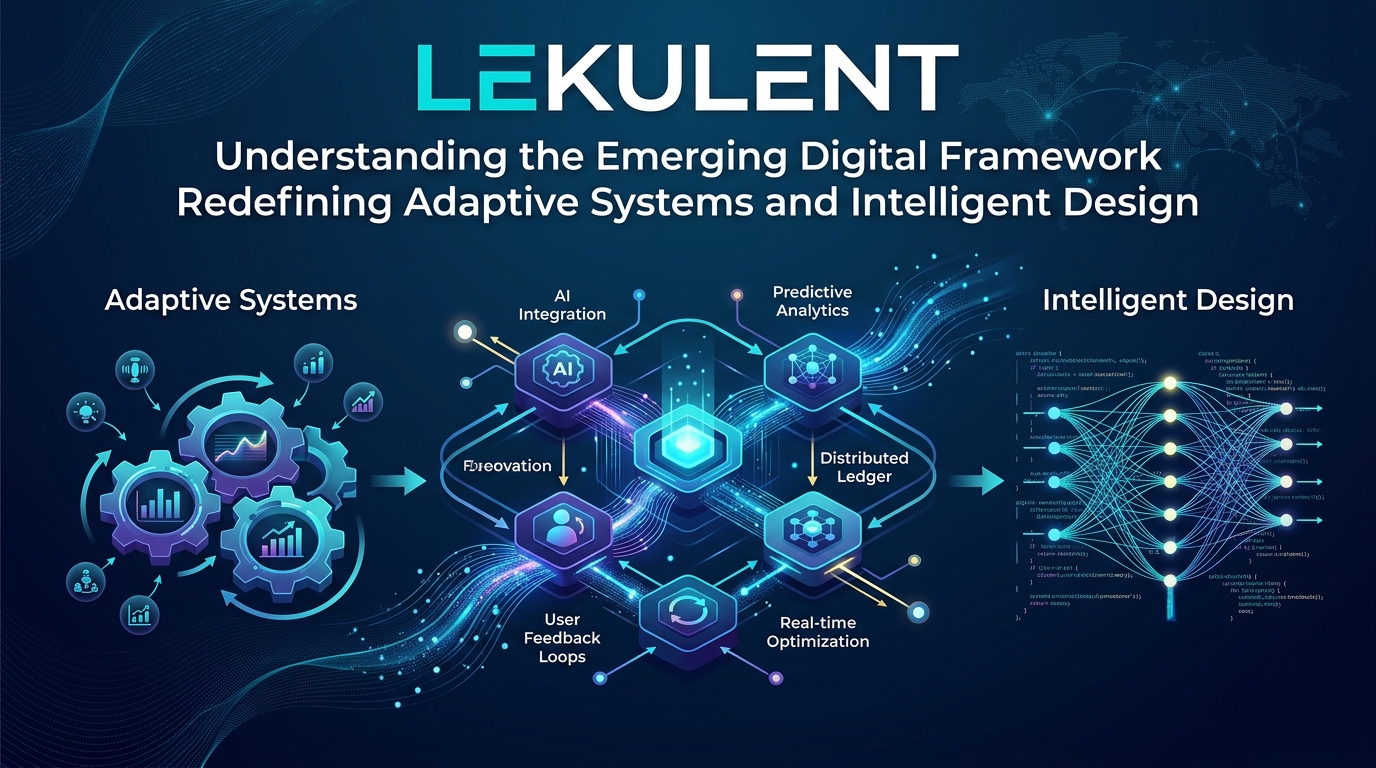
In a quiet product lab in Berlin, a small team watches a system evolve in real time. It is not a traditional software product, nor a fixed digital tool. Instead, it behaves more like a living structure shifting its interface, adjusting its logic, and reconfiguring its outputs based on user interaction patterns. The team calls this experimental framework lekulent, a term that is slowly gaining attention in niche circles of digital innovation and system design.
The concept of lekulent represents a new way of thinking about digital systems ones that are not static or purely reactive, but fluid, adaptive, and continuously self-optimizing. In an era where users expect personalized, real-time responsiveness from platforms, lekulent thinking is beginning to influence how founders, engineers, and designers approach product architecture.
Rather than building software as a fixed product, lekulent systems treat digital environments as evolving ecosystems.
The Origin and Meaning of Lekulent in Modern Digital Thinking
Although still an emerging concept, lekulent is often used to describe systems that are liquid in structure but intelligent in behavior. The term has been adopted informally by designers and engineers working at the intersection of AI, adaptive UX, and behavioral analytics.
At its core, lekulent thinking challenges a long standing assumption in technology: that digital products should behave consistently across all users and contexts. Instead, it suggests that inconsistency when guided by data and intention—can create more meaningful user experiences.
For example, a lekulent system might not display the same interface twice in a row. Instead, it adjusts layout, content flow, or interaction style based on user history, engagement depth, or predictive behavior models. The goal is not randomness, but context-aware fluidity.
This approach is becoming more relevant as AI systems grow more capable of real time adaptation, enabling platforms to behave less like tools and more like responsive environments.
Why Lekulent Thinking Is Emerging Now
The rise of lekulent systems is closely tied to three major technological shifts.
First, the expansion of machine learning models has made it possible for platforms to interpret user behavior at a granular level. Systems no longer rely solely on explicit inputs; they now analyze patterns, timing, sentiment, and interaction sequences.
Second, cloud-native architectures allow for continuous deployment and real-time updates. This means digital systems can evolve without downtime, making adaptive structures more practical than ever before.
Third, user expectations have fundamentally changed. People no longer want static dashboards or rigid workflows. They expect personalization, predictive assistance, and seamless transitions across devices and contexts.
In this environment, lekulent design is not just innovative it is becoming necessary.
Core Principles of Lekulent Systems
Lekulent systems are built around a few foundational principles that distinguish them from traditional software architectures.
At the heart of lekulent thinking is adaptability without fragmentation. While systems change dynamically, they must maintain coherence so that users do not feel lost or disoriented.
Another key principle is contextual responsiveness. Instead of responding only to direct commands, lekulent systems interpret broader signals such as user behavior patterns, environmental conditions, and historical interactions.
A third principle is continuous evolution. Unlike traditional systems that evolve through version releases, lekulent systems evolve in real time, often invisibly to the user.
Together, these principles create a framework where digital environments behave less like tools and more like intelligent companions.
Lekulent vs Traditional Digital Systems
To understand the significance of lekulent design, it is helpful to compare it with conventional system architecture.
| Dimension | Traditional Digital Systems | Lekulent Systems |
|---|---|---|
| Structure | Fixed and predefined | Fluid and adaptive |
| User Experience | Uniform for all users | Personalized and dynamic |
| Update Cycle | Version-based releases | Continuous real-time evolution |
| Decision Logic | Rule-based programming | Data-driven adaptive intelligence |
| Interface Design | Static layouts | Context-sensitive interfaces |
| System Behavior | Predictable outputs | Emergent and evolving behavior |
This comparison highlights a fundamental shift. Traditional systems prioritize stability and predictability, while lekulent systems prioritize adaptability and responsiveness. Neither approach is inherently superior, but they serve very different digital eras.
Real-World Applications of Design
Although still emerging as a concept, elements of thinking are already visible across several industries.
In digital marketing, platforms adjust campaign content in real time based on engagement data. Ads, messaging, and visuals shift dynamically depending on audience response patterns. This is a practical expression of lekulent logic.
In product design, many modern applications now use adaptive interfaces that reorganize themselves based on user behavior. Frequently used features become more prominent, while rarely used ones fade into the background.
In AI-driven customer service systems, responses evolve based on conversation history and emotional tone analysis, creating more natural and context-aware interactions.
Even in entertainment platforms, recommendation engines continuously reshape content discovery paths, creating highly individualized user journeys.
These examples show that lekulent principles are not theoretical they are already embedded in many digital ecosystems, even if not explicitly labeled as such.
The Technology Behind Lekulent Systems
The foundation of lekulent architecture lies in a combination of AI, data engineering, and dynamic interface design.
Machine learning models play a central role by continuously analyzing user behavior and predicting likely actions. These predictions are then used to reshape system responses in real time.
Event-driven architectures ensure that every user interaction becomes a signal that can trigger system adjustments. Instead of waiting for batch processing, lekulent systems respond instantly.
Meanwhile, modular front-end frameworks allow interfaces to be reconfigured dynamically without breaking usability. This enables seamless transitions between different states of user experience.
The result is a system that behaves less like a static application and more like a responsive digital organism.
Challenges in Implementing Frameworks
Despite its promise, design introduces significant challenges.
One of the primary concerns is user disorientation. When systems change too frequently or too subtly, users may struggle to build mental models of how the platform behaves.
Another challenge is engineering complexity. Building systems that adapt in real time requires advanced infrastructure, continuous monitoring, and robust fallback mechanisms to prevent instability.
There is also the issue of ethical transparency. If systems are constantly evolving based on user data, it becomes essential to ensure that users understand how and why changes are occurring. Without transparency, lekulent systems risk feeling opaque or manipulative.
Finally, there is the question of over-optimization. A system that adapts too aggressively to behavior signals may reinforce short-term engagement patterns at the expense of long-term value.
A Practical Overview of Lekulent Characteristics
Below is a simplified overview of how lekulent systems behave across different operational dimensions:
| Aspect | Lekulent Behavior |
|---|---|
| User Interface | Dynamically reconfigures based on usage patterns |
| Content Delivery | Personalized in real time using behavioral signals |
| System Updates | Continuous, invisible to end users |
| Decision Making | Hybrid of AI prediction and rule-based constraints |
| Data Usage | Real-time analytics and historical pattern learning |
| Optimization Goal | Balance between engagement, usability, and adaptability |
This structure helps clarify how lekulent systems function as integrated, evolving environments rather than static tools.
The Future of Systems in Digital Ecosystems
As artificial intelligence becomes more deeply integrated into everyday platforms, lekulent design principles are likely to expand significantly.
Future applications may include fully adaptive educational platforms that adjust teaching styles based on student comprehension in real time. Business software may evolve into systems that reorganize workflows dynamically based on team behavior. Even personal devices may begin to behave more like adaptive assistants than fixed tools.
For founders and product builders, this shift introduces both opportunity and responsibility. Designing lekulent systems requires balancing innovation with clarity, ensuring that adaptability enhances rather than complicates the user experience.
Over time, we may see lekulent thinking become less of a niche concept and more of a foundational principle in digital architecture.
Conclusion: Why Matters in the Evolution of Digital Systems
The idea of lekulent captures a broader transformation happening in technology today. Static systems are giving way to adaptive ecosystems. Predictable interfaces are evolving into intelligent environments. And fixed workflows are being replaced by continuous, data-informed evolution.
For entrepreneurs, technologists, and designers, understanding lekulent principles is not just an academic exercise it is a practical advantage in building the next generation of digital products.
As systems become more intelligent and responsive, the boundary between software and experience continues to blur. In that space, lekulent stands as a useful framework for thinking about how digital environments can evolve in harmony with human behavior, rather than in isolation from it.