
 By Aliza Beth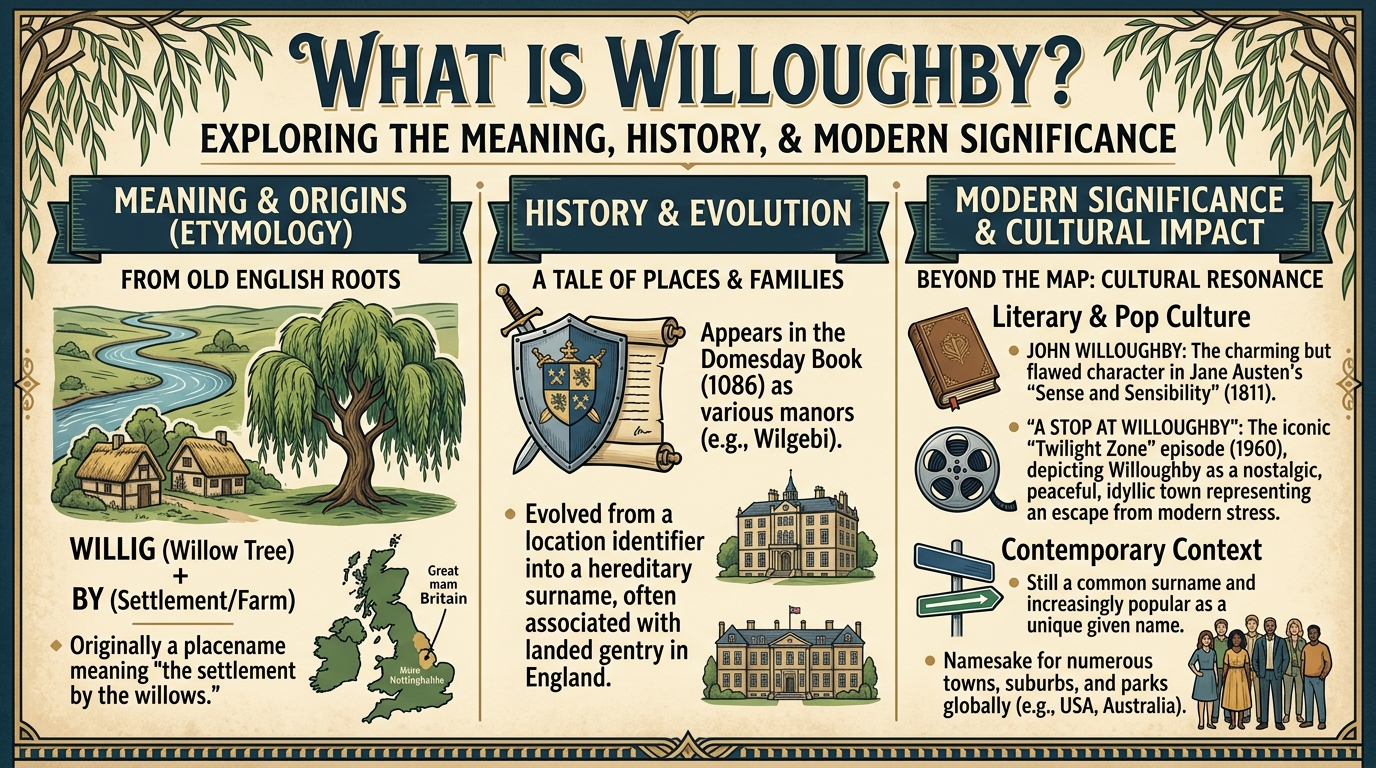
Imagine hearing a place name repeatedly in books, television shows, business discussions, or travel conversations without ever fully understanding its meaning. That experience has led many people to search for what is Willoughby, a question that seems simple on the surface but opens the door to a fascinating exploration of history, geography, culture, and identity.
The name Willoughby has appeared in numerous contexts over the years. It can refer to towns, neighborhoods, family surnames, historical figures, fictional characters, and even cultural references that have become part of popular imagination. Its enduring presence across different fields raises an interesting question: why has this particular name remained relevant for so long?
Understanding Willoughby requires looking beyond a single definition. Instead, it involves examining how names evolve, how places influence culture, and how historical identities continue shaping modern communities. Whether encountered in literature, business, travel, or local history, Willoughby represents a rich blend of heritage and contemporary significance.
The Origins of the Name Willoughby
To understand what Willoughby means today, it is useful to begin with its origins.
The name traces its roots to Old English. Linguists generally believe it derives from words associated with willow trees and settlements or farms. In its earliest form, the name likely described a village or community located near willow-covered land.
Throughout medieval England, geographical surnames became increasingly common. People were often identified by the locations where they lived or originated. Over time, Willoughby evolved from a place description into a recognized surname and place name.
This transformation reflects a broader pattern in naming traditions. Many names that are now associated with individuals or communities originally served as practical geographic descriptions.
As populations expanded and societies became more interconnected, names like Willoughby gained wider recognition and cultural significance.
Understanding the Different Meanings of Willoughby
One reason so many people ask what is Willoughby is because the term has multiple meanings depending on context.
In some situations, it refers to specific towns and communities. In others, it functions as a family surname with historical roots stretching back centuries. The name also appears in literature, entertainment, and popular culture.
Rather than having a single definition, Willoughby serves as an example of how language evolves over time. A name that once described a geographic location can eventually become associated with people, stories, businesses, and institutions.
The versatility of the term contributes to its continued relevance across generations.
Willoughby as a Place Name
Perhaps the most common use of Willoughby is as a geographical designation.
Several communities around the world carry the name, particularly in English-speaking countries. These locations often developed from early settlements established during periods of migration and expansion.
Many towns named Willoughby maintain strong connections to local history while embracing modern development. Residents frequently view the name as an important part of community identity.
Place names play a significant role in shaping how people perceive and connect with their surroundings. They preserve historical narratives while providing continuity between past and present generations.
For visitors and newcomers, names like Willoughby often spark curiosity about local heritage and regional development.
Willoughby in Literature and Popular Culture
The cultural significance of Willoughby extends beyond geography.
Writers have frequently used the name in novels, stories, and fictional settings. Its traditional English character gives it a timeless quality that appeals to authors seeking memorable names for characters or locations.
Popular culture has further expanded public awareness of the term. Television programs, films, and literary works have introduced Willoughby to audiences who may have no direct connection to the places or families associated with the name.
This literary presence contributes to the ongoing popularity of searches related to what is Willoughby. Many individuals encounter the name in entertainment and naturally become interested in its origins and meaning.
The relationship between names and storytelling demonstrates how language can acquire layers of significance over time.
The Historical Legacy of the Willoughby Name
History provides another important dimension to understanding Willoughby.
Throughout the centuries, various families carrying the surname played roles in local governance, commerce, military service, and community leadership. Historical records frequently mention individuals bearing the name in connection with social and political developments.
Although not every branch of the Willoughby name shares the same lineage, the surname’s long-standing presence in historical documents contributes to its enduring recognition.
Names often function as links to the past, preserving connections between modern individuals and earlier generations. The historical legacy associated with Willoughby illustrates how names can become part of broader cultural narratives.
Key Contexts Where the Name Willoughby Appears
The following table highlights the most common contexts in which people encounter the name Willoughby today.
| Context | Description |
|---|---|
| Geography | Towns, suburbs, and local communities |
| Family Names | Historical and modern surnames |
| Literature | Characters and fictional locations |
| Popular Culture | Television, films, and media references |
| Business | Company names and commercial brands |
| History | Historical records and notable figures |
This diversity explains why the name continues generating interest among researchers, travelers, and general readers.
Why Names Like Willoughby Remain Relevant
In an increasingly digital world, one might assume that traditional names would gradually lose relevance. Yet the opposite often occurs.
People remain deeply interested in the origins of names because names provide context, identity, and continuity. They connect individuals to places, families, and cultural traditions.
Names also influence perception. Certain names evoke specific emotions, historical associations, or visual imagery. Willoughby often conveys a sense of heritage, stability, and tradition, which may explain its enduring appeal.
Businesses, authors, and organizations frequently select names with historical depth because they communicate credibility and character.
The continued interest in Willoughby reflects this broader human fascination with meaning and identity.
The Role of Place Names in Community Identity
Communities often develop strong emotional connections to their names.
A place name becomes more than a geographic label. It represents local history, shared experiences, and collective identity. Residents may take pride in preserving traditions associated with the name while adapting to changing social and economic conditions.
Willoughby serves as an example of how place names contribute to community cohesion. Whether in a small town or a growing urban district, the name helps establish a sense of belonging among residents.
This connection between identity and geography remains important even as communities become increasingly connected through technology and globalization.
Modern Interpretations of Willoughby
Today, the meaning of Willoughby continues evolving.
Modern audiences encounter the name through online searches, digital media, travel content, genealogy research, and educational resources. Each context adds new layers to its significance.
For some individuals, Willoughby represents family heritage. For others, it refers to a destination, a fictional setting, or a cultural reference. The flexibility of the term allows it to remain relevant across different generations and interests.
The internet has also made it easier than ever to explore the history and meanings behind names. As a result, curiosity about terms like Willoughby continues growing.
What Is Willoughby in Today’s World?
In contemporary society, Willoughby is best understood as a multifaceted name with historical, geographical, and cultural importance.
It is not confined to a single definition. Instead, it represents a combination of heritage, identity, storytelling, and community. Its presence across different fields demonstrates the enduring power of names to connect people with places, traditions, and ideas.
Whether encountered in a travel guide, a novel, a historical document, or an online search, the name continues to spark curiosity because it carries meaning beyond its literal definition.
That ability to transcend a single context is part of what makes Willoughby so intriguing.
Conclusion
When people ask, “What is Willoughby?” they are often seeking more than a simple answer. They are exploring a name that has traveled through centuries of history, appeared in diverse cultural settings, and maintained relevance across generations.
From its origins as an Old English place name to its modern role in geography, literature, genealogy, and popular culture, Willoughby illustrates how names evolve while preserving connections to the past. Its continued presence in contemporary conversations reflects the enduring importance of identity, heritage, and storytelling in human society.
Ultimately, Willoughby is not merely a word on a map or a surname in a historical record. It is a reminder of how language, history, and culture intersect to shape the world around us.